
The Call Pool Blue Print™ - A Straight-Forward Marketing Philosophy
The Inspiration
When I was 14 years old, I spent a summer with my grandmother in San Diego. She worked the graveyard shift as a telephone operator, and sometimes I went to work with her.
I remember watching the giant switchboard light up. Lights flashed as calls flooded in. She answered each call calmly, routing them for a team of doctors.
It was her job to determine which calls were urgent enough to pass along.
They called this system, "The Call Pool".
I Decided to Call Top Online Visibility - The Call Pool
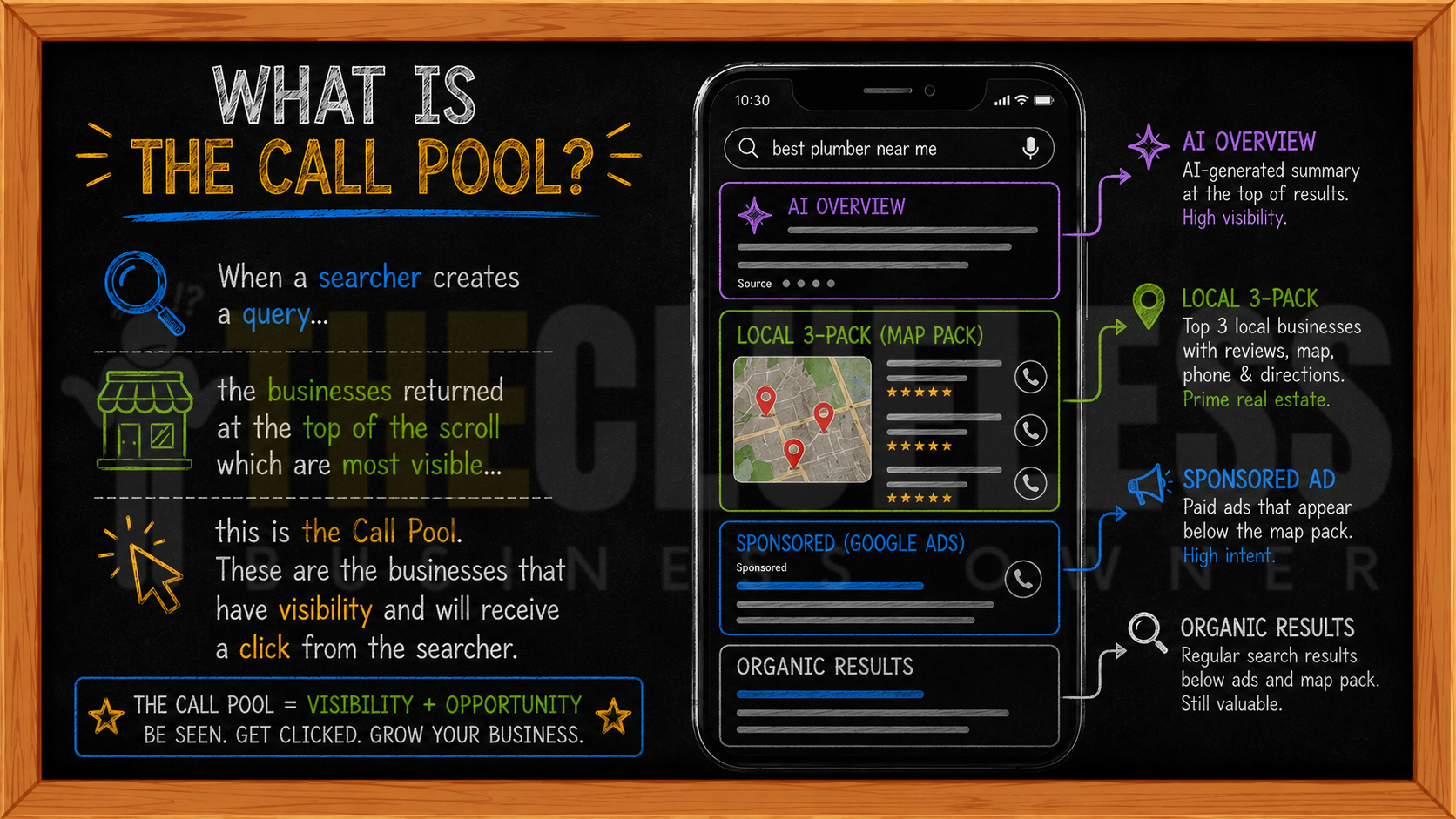
I wanted a simple (non-intimidating) way to explain what happens every time someone searches online for a plumber, chiropractor, electrician, spa, or any other local service business.
When someone searches, only a small group of businesses receives the majority of the attention—and ultimately, the calls.
I kept thinking about those businesses that consistently appear at the top of the search results. They have the first opportunity to earn a customer's business simply because they're the ones people see first.
As I was brainstorming a name for this concept, I thought about a tool I use every day called CallRail. One of its features is called a call pool, which uses a pool of tracking phone numbers to identify where incoming leads come from.
The phrase stuck with me because, at the end of the day, every marketing effort is about generating one thing—more calls from potential leads.
Then a flashback to my grandmother and spending that summer going to work with her, all the calls coming in were called "The Call Pool".
The businesses that appear at the top of Google Search, Google Business Profile, AI search results, maps, and other online platforms become the group competing for those incoming opportunities.
Not every business gets the call.
Only the businesses most visible.
The Call Pool is simply this: The total number of service calls available in a particular niche, divided among the businesses that are visible in the search and reachable by the consumer on any given day.
This idea became the foundation for The Call Pool Blueprint™.
The Call Pool Blueprint™ is a free education experience that introduces service business owners to the core principles behind online visibility.
Inside, you'll learn:
- What determines which businesses get the most visibility
- The fundamentals of online marketing (digital real estate as I call it)
- AI's role in online marketing
- The foundational strategies that can help your business be more visible & get more leads
The Call Pool Blueprint™
TOTALLY FREE and will be available any day now for download.
You can sign up for it now and a link will be sent to you when it is ready.
Just click here to sign up for the class.
To Find a Solution, You First Need to Identify the Real Problem
When a service-based business owner isn't getting enough jobs to sustain their business, they try to figure out why.
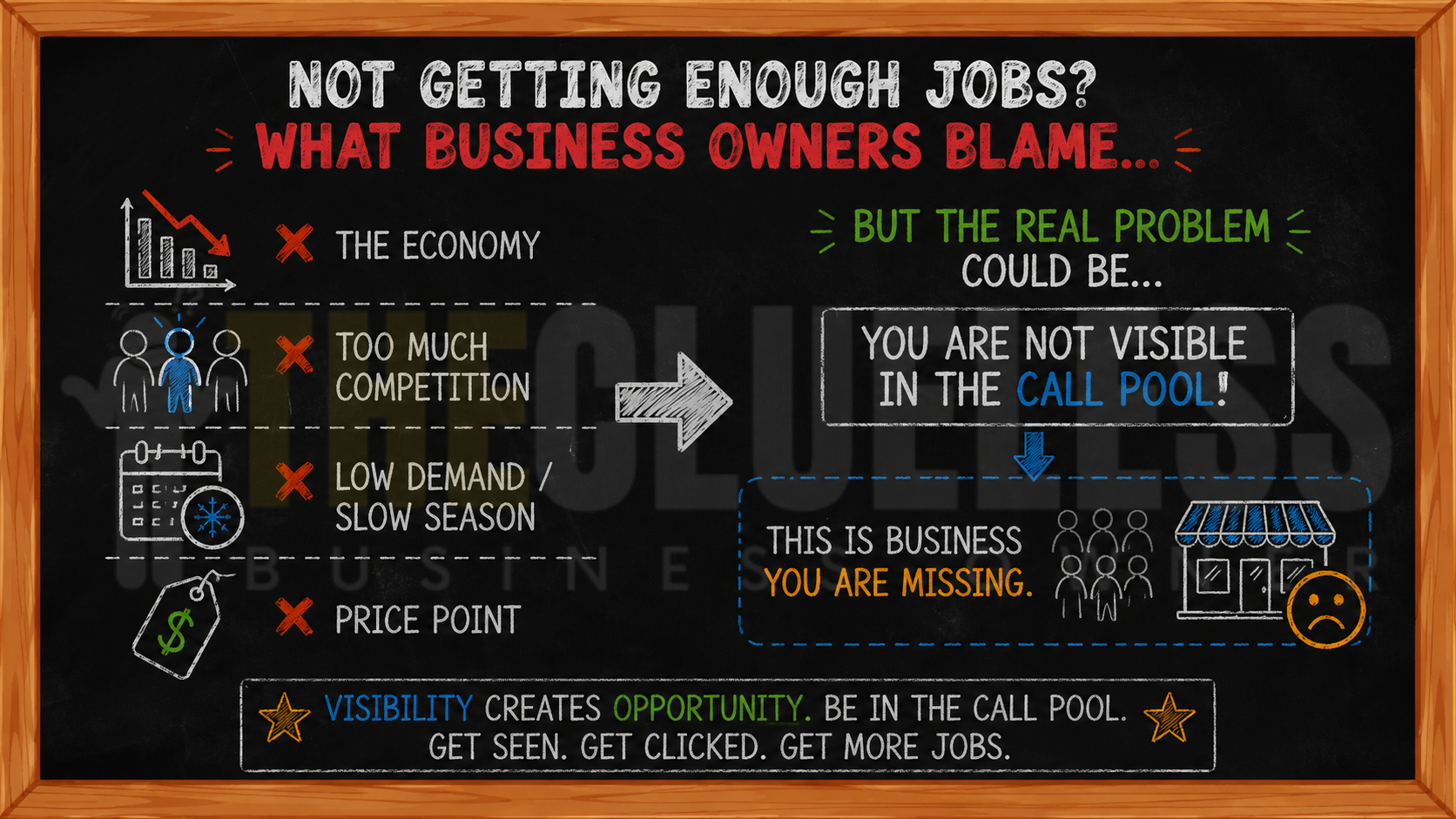
After working with business owners for years, I’ve noticed they typically blame the same few things:
- The economy
- Too much competition (most popular)
- Low demand or a "slow season"
- Their price point
To be fair, any of those issues can be valid and yes, absolutely create am impact.
But before you blame the economy or your pricing, you have to answer one critical question:
Is your business actually visible inside the Call Pool?
Because if the answer is no, then visibility is your real problem.
What is The Call Pool Blueprint™?
The Call Pool Blueprint™ is a straight-forward marketing philosophy for service businesses. It teaches you how to increase your online visibility so your business becomes one of the primary companies customers actually call.
By improving your presence where customers look—Google, maps, reviews, modern AI search, and local directories—you create more opportunities to get chosen.
To see exactly how this works, take out your phone right now and search for a service (not yours something different):
- “Plumber near me”
- “Best roof replacement company”
- “Handyman in [Your City]”
- "Nearest med spa"
Now, think about your own behavior. When you need a service for your home, what do you do?
- Do you scroll endlessly through hundreds of search results?
- Do you review 20 different websites?
- Do you research every single business in your city?
I bet you don't.
Most people make decisions quickly when they need a service business. They choose from the small, select group of businesses they immediately see at the top of their scroll.
It's this group of businesses they feel they can trust just because of where they are located on the page.
This highly visible group is the Call Pool.
Whether most business owners realize it or not, the vast majority of calls, clicks, and dollars are distributed exclusively among those few visible businesses. If you aren't in that pool, you aren't even in the game, and THAT is a big problem.
You Already Have High "Search Equity" (Even If You're Ignoring It)
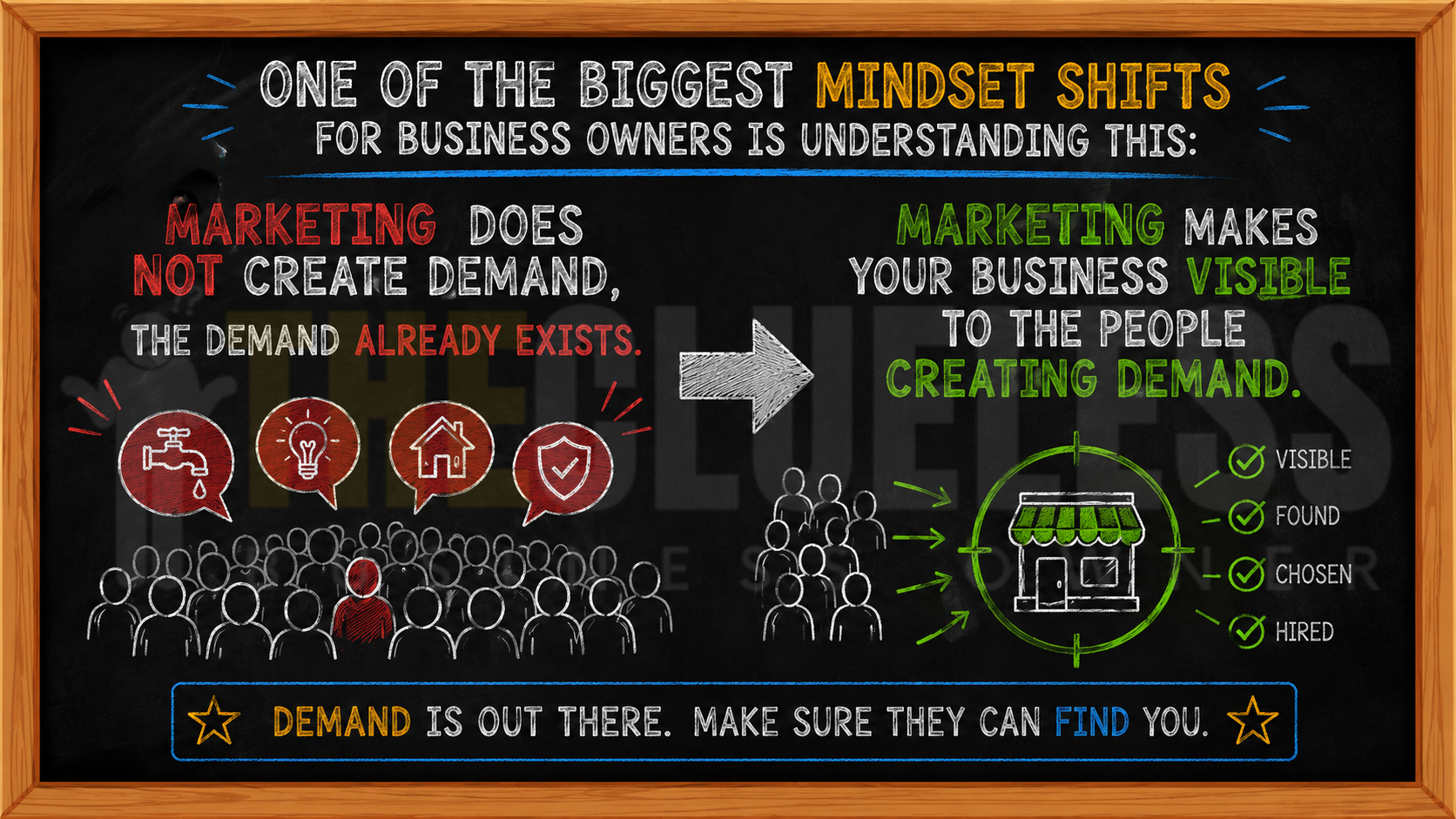
If you own a retail store on Main Street, a valuable asset is the sidewalk. Hopefully, lots of people walk past your front window every day. They see your business - this is sidewalk equity.
You have the exact same asset except it's online.
I call it Search Equity.
Search Equity simply means as a service business you own a highly valuable (built-in) financial asset—whether you are actively claiming it or not.
It means a guaranteed number of ready-to-buy customers are already standing outside the virtual door every single day.
High Search Equity is built into the very nature of local service businesses, including:
- Plumbing & HVAC
- Roofing & Window Replacement
- Pest Control & Electricians
- Dermatologists
- Spas
- Landscaping
- Etc...
Every single morning, local consumers wake up, open their phones, and type phrases directly into Google:
- “Plumber near me”
- “AC repair emergency”
- “Roof replacement company”
- “Best dermatologist in my area”
The built-in demand for your business is a massive advantage. The traffic is already there.
The question is are you?
The Social Media Trap vs. The Search Reality
A lot of business owners tell me, "I do marketing! I post on my business social media pages three times a week."
Let's get real, no one with a busted pipe or overflowing toilet hops onto Instagram or Facebook, and looks for a plumber.
People who are on Facebook are just trying to watch funny videos or look at photos of their grandkids.
No, I am not saying don't post on Facebook. Do post there and reinforce your business with your community (especially since AI crawls social media).
Just don't count on it as a tool to tap into your search equity.
If someone needs a service business they are going to conduct a search via Google or some other vehicle like Chatgbt etc.
That urgent, ready-to-buy traffic is your Search Equity. And if your business isn't sitting inside the Call Pool when those searches happen, you are actively giving your equity-share away to your competitors.
Your Visibility Determines Your Call Share
Many business owners still believe that great service alone is enough to grow a business. It isn’t. Not in today's online world.
Just like restaurant owners think having great food is enough to keep their doors open.
I think if the last few years have taught us anything is that no amount of complacency is safe!
Great service matters tremendously for retention, reviews, and referrals.
But before someone can experience your world-class service, they first have to know your business exists. Invisible businesses struggle no matter how good they are at the job.
You need to hear this loud and clear:
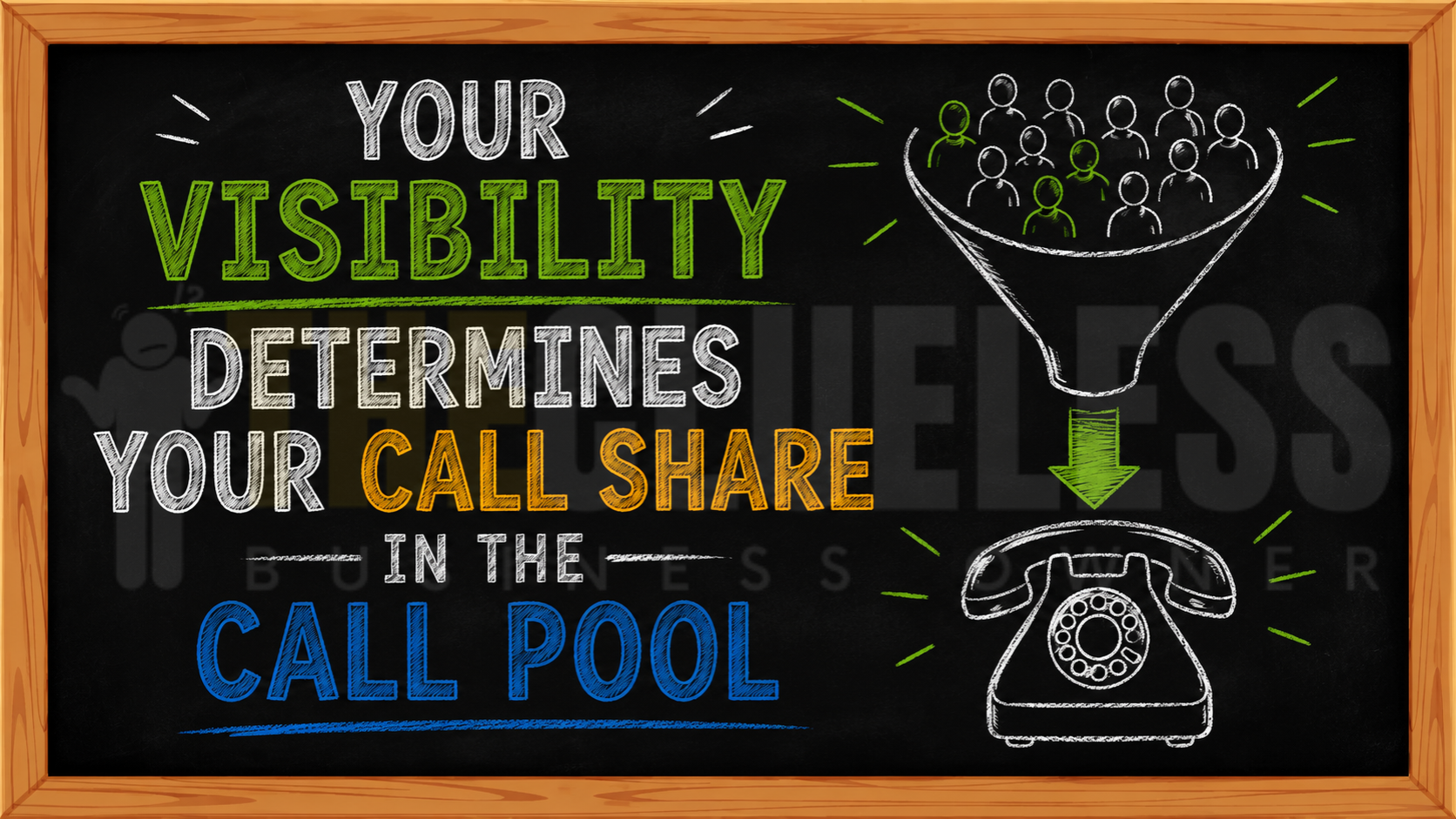
You are no longer simply competing on service quality. You are competing for visibility.
The Phone Book Blueprint
Years ago, local service businesses relied heavily on a predictable mix of marketing:
- Word of mouth
- Newspaper and radio ads
- Direct mail flyers
- Drive-by traffic
And if you are old enough to remember the thick yellow paper phone book, you probably remember how many companies started their name with the letter “A".
- AAA Plumbing
- A-1 Roofing
- A+ Handyman
Why did they do that? Because they wanted to appear first in the directory.
Even many decades ago, business owners clearly understood the value of being listed first.
The funny thing is, I do not see nearly that same level of urgency from business owners when it comes to ranking at the top of internet search results today—even though online visibility is exponentially more important than a phone book ever was.
Maybe it's because the internet feels too complicated. (And to be fair, it is.) Or maybe it's because many business owners don’t fully realize how modern consumers make decisions.
The "Beachfront Property" of the Internet
Today's consumers search online for almost everything. The largest share of those searches happen on mobile phones (over 70%), where people have this tiny screen, and make lightning-fast decisions based entirely on the businesses appearing at the top of the scroll.
- They are not spending hours researching.
- They are not reviewing dozens of companies.
- They are choosing from the small handful of businesses they immediately see.
This is why digital visibility has become a modern form of business real estate. And being at the very top? That is beachfront property (because it's the best).
Securing some online beachfront property is certainly not as simple as naming your business something that starts with the letter A. It isn't free, either.
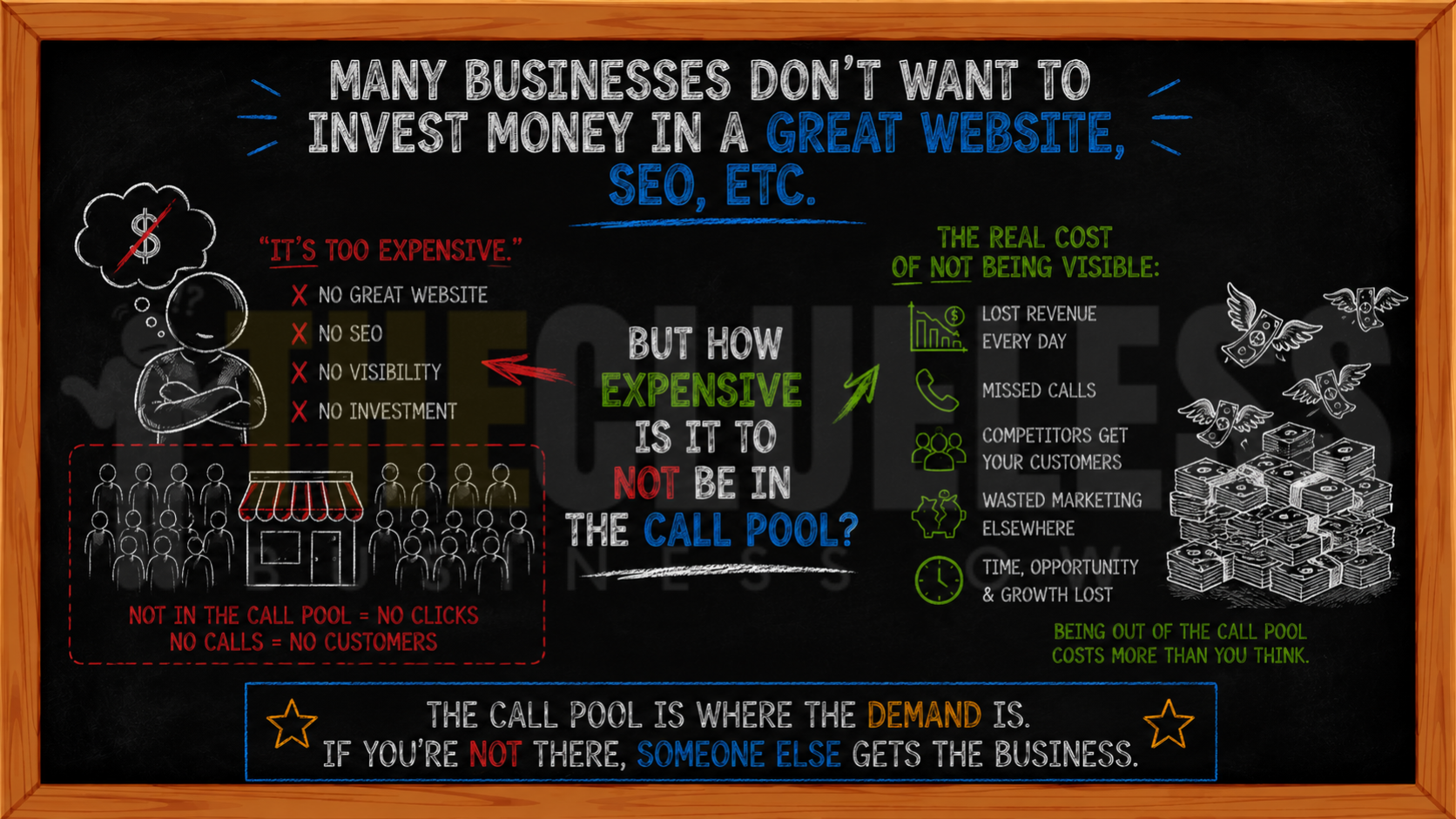
But ask yourself: How expensive is it to stay invisible?
Every single day your business is absent from the Call Pool, you are actively losing calls that your competitors are gaining.
The businesses that understand visibility—and invest in it consistently—are the ones that continue growing.
Most Businesses Are More Invisible Than They Realize
If you own a local service business, I want you to pause right now and do a quick, eye-opening exercise.
Take out your phone, open a private or "incognito" browser window, and search for your service exactly the way a customer would. Don’t type in your company name. Instead, type in something generic like “Plumber near me” or “AC repair [Your City].”
(Note: You must use an incognito window. Otherwise, Google remembers your past history and will falsely show your own business at the top.)
Now, look at the screen. Are you visible inside the Call Pool? Is it at the top of the scroll? Or do you have to scroll, scroll, and scroll just to find your business?
This one-minute exercise should give you a quick reality check - or it may give you some reassurance.
The Call Pool is Way Bigger Than Just SEO
Don't make the mistake of assuming this concept is just another name for Search Engine Optimization (SEO).
It is definitely not.
I'm not talking about just ranking your website organically. The Call Pool is much bigger.
It includes every single form of prime visibility that captures a buyer's attention at the top of the scroll:
Google Local & Search Ads (The paid real estate at the very top)
Google Maps & Ask Maps (Local discovery and conversational local search)
Google Business Profiles (The local Map Pack)
AI Search Overviews (The new automated answer snippets)
Review Platforms & Directories (Yelp, Yellow Pages, etc)
Organic Search Rankings (Your actual website link)
Video & Social Visibility (Youtube, Facebook etc.)
The companies dominating your local market aren't just betting on one of these pieces of real estate. Some are appearing in multiple places simultaneously. And that leads directly to the ultimate visibility strategy. (Call Pool Monopoly)
And now Google Maps itself is evolving.
With Ask Maps, customers can ask longer, more specific questions like, “Who is a reliable plumber near me who works on older homes?” Google can then use what it knows about local businesses to identify relevant options.
That doesn't change the Call Pool. It expands the ways a business can get into it. The search may look different, but the businesses Google puts in front of that customer are still competing for the same call.
Achieving a "Call Pool Monopoly"
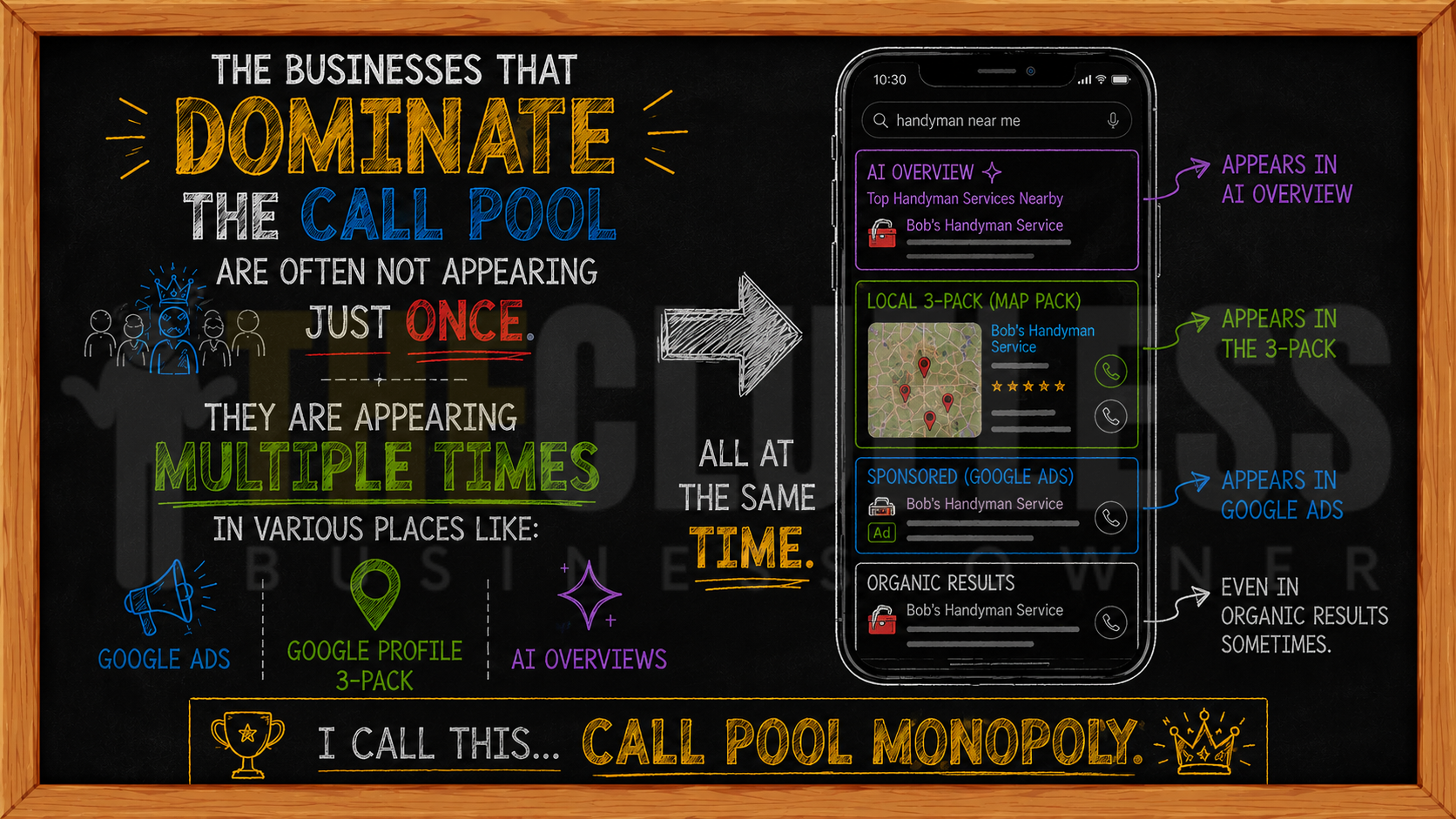
The businesses that truly crush it don't just sit in the Call Pool once. They claim a
Call Pool Monopoly.
This happens when a customer types in a search, and your business pops up multiple times in different positions all at the exact same time.
For example, a homeowner searches for “best plumber near me” and suddenly sees your company name:
- Featured at the very top in a paid Google Ad.
- Listed again right below it in the Google Maps 3-Pack.
- Mentioned inside the automated AI Overview box.
- In organic results.
By appearing 2 or more times in a single search, you are now in a position of authority.
Psychologically, the searcher sees your business name more than once makes a subconscious decision: This must be the best/safest choice.
You win the click and the call before they even look at anyone else.
The Bottom Line
Every single day, local searchers are making split-second decisions about who to hire and what to buy.
They aren’t going to scroll for days. They aren’t going to visit a dozen websites.
They will quickly choose the handful of businesses that appear first and look the most trustworthy.
This means your online visibility, your positioning, your reviews, and your consistency are critical to the actual survival of your business.
The owners who grasp and embrace this concept are the ones who will dominate their local markets.
Claim Your Spot in the Call Pool
Are you ready to stop guessing and start claiming your share of the market?
I am currently recording a brand-new, completely
FREE learning experience built specifically for you:
The Call Pool Blueprint™.
Inside this free training, I am going to map out the exact landscape of your local search market, show you how to find your missing leads, and reveal the prime positions your business needs to occupy.
This learning experience will be published soon!
Want to get notified the moment it goes live? Click here to leave your email address on the early-access waitlist, and I'll send you The Call Pool Blueprint the exact second it goes live.
Keep Learning

Growth Mindset
Give a group of people the same business to run and access to all the same resources. Some will succeed and some will fail. What is the deciding factor? Their mindset. This is what divides.

Marketing Strategy
Want to blow your competitors out of the water? It really isn't that complicated. Just HAVING a strategy can do the trick! (Pssst they don't usually have one.)